
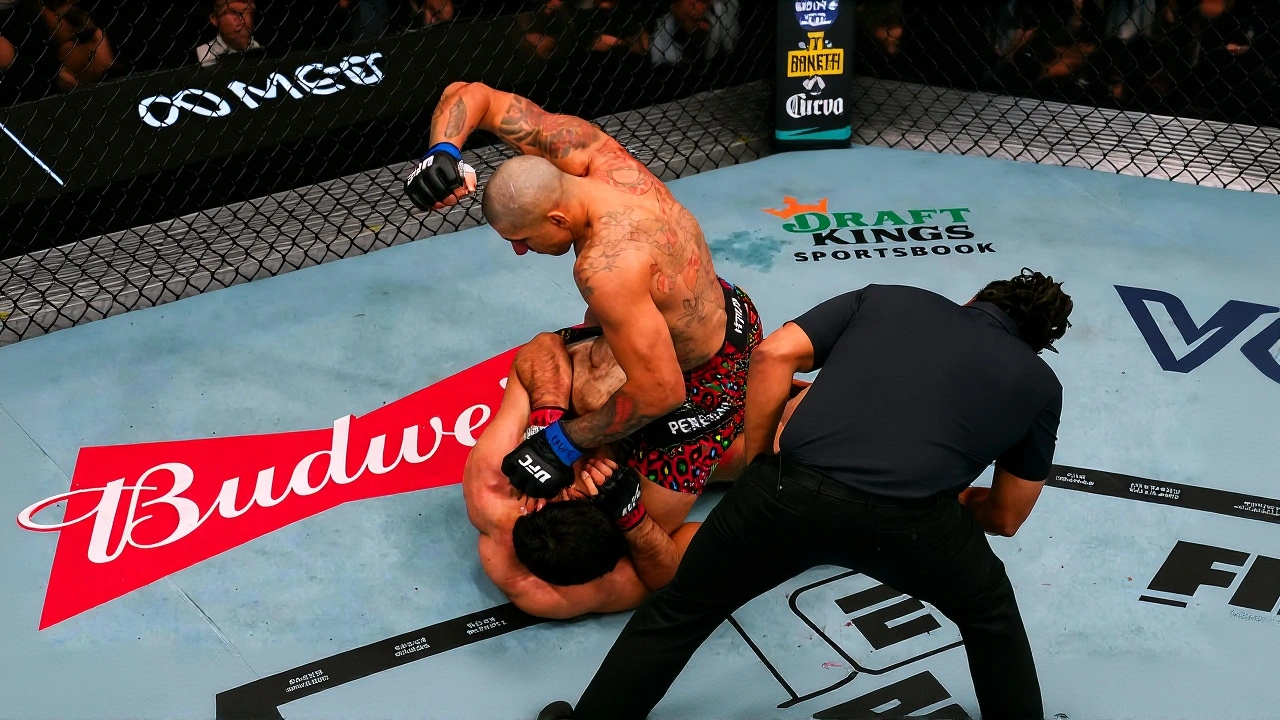
When Alex Pereira, UFC light‑weight heavyweight champion of UFC stepped into the Octagon at UFC 320T‑Mobile Arena, Las Vegas, Nevada, the stakes were crystal clear: the UFC light heavyweight championship was on the line.
Background and rivalry
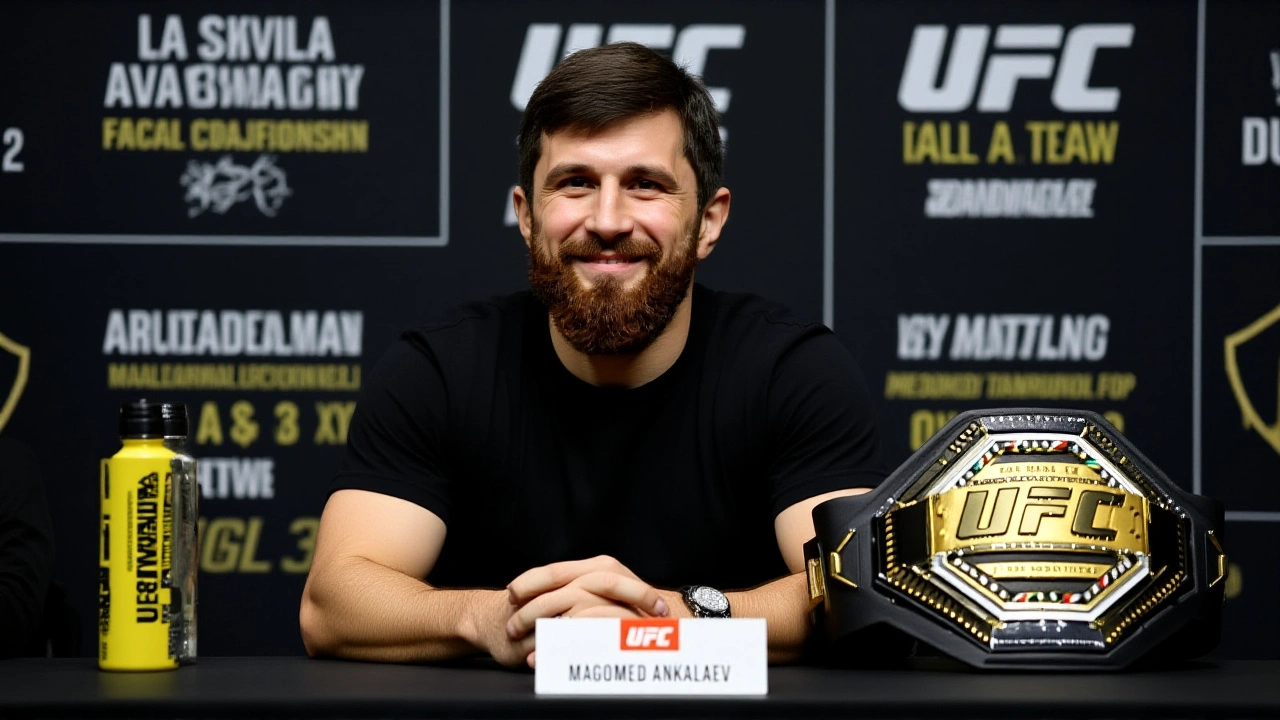
The clash was a sequel to a March 2025 showdown that saw Magomed Ankalaev, a seasoned Russian striker with a 21‑2‑1 record, claim the belt via a unanimous decision. That bout, held at UFC 285, ended with Pereira nursing a fractured tibia and a lingering respiratory illness – details his camp only confirmed weeks later to ESPN. The injury, coupled with an antibiotic course, explained the Brazilian’s hesitant footwork and the title slip.
In the months that followed, Pereira vanished from the gym, focusing on rehab and rebuilding his striking rhythm. The hiatus paid off; his last three fights before UFC 320 were all finishes, two by knockout and one by submission, bringing his MMA knockout tally to twelve.
Fight night details
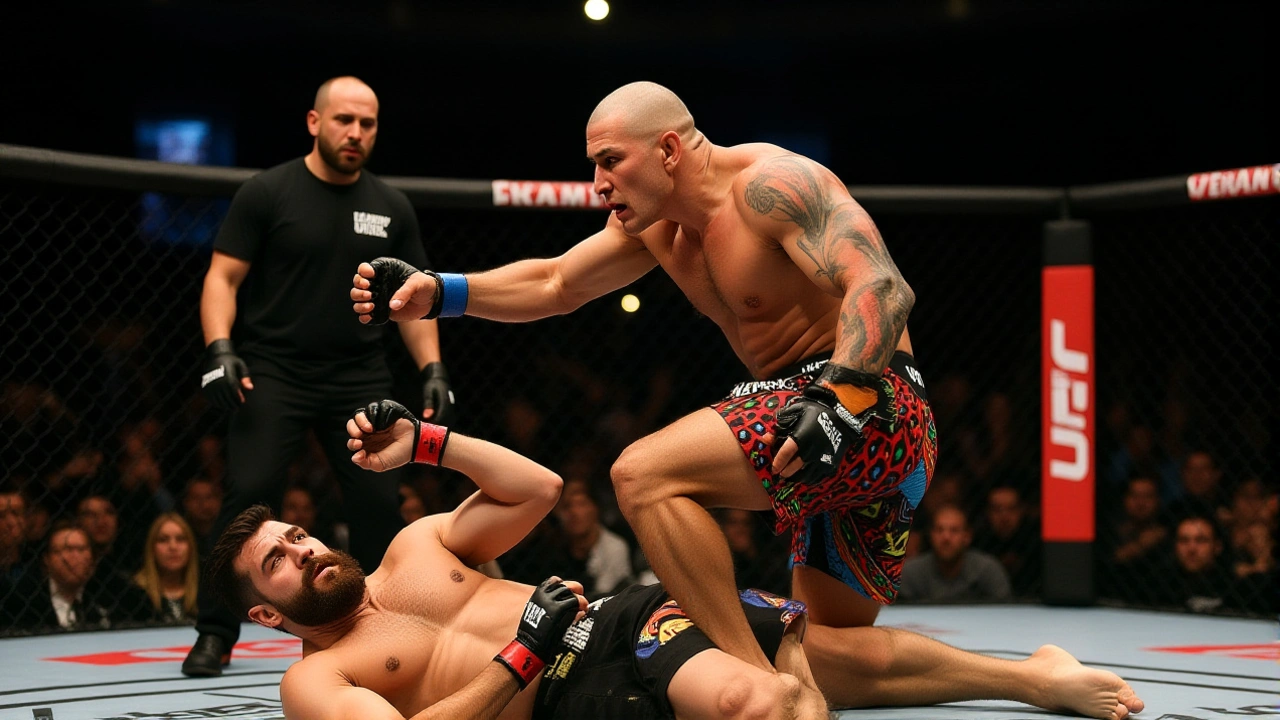
From the opening bell, the atmosphere at T‑Mobile Arena crackled. Pereira launched a ferocious right hand that snapped Ankalaev’s chin clean off, sending the Russian crashing to the canvas within ten seconds. The referee let the fight continue, and the Brazilian quickly moved to top position, unloading a barrage of elbows that forced the doctor’s stoppage at 1:20 of Round 1.
Statistically, the fight was a blowout. Pereira landed 48 of 71 total strikes (68% accuracy) while Ankalaev managed just 9 of 30. The knockout marked Pereira’s 12th career KO, pushing his knockout‑to‑win ratio to 70% (12 KOs in 17 victories). For reference, the average KO rate for light‑heavyweight champions sits around 45%.
- Event: UFC 320 – October 5, 2025
- Location: T‑Mobile Arena, Las Vegas, Nevada
- Result: Pereira wins by TKO at 1:20 of Round 1
- Pereira’s record moves to 14‑3
- Ankalaev’s record drops to 21‑2‑1
Reactions from the MMA world
Former heavyweight champion Jon Jones took to social media minutes after the finish, tweeting, “That’s a masterclass in striking. If he wants to move up, the heavyweight division better be ready.”
Legendary former champion and current analyst Daniel Cormier praised the performance on UFC’s broadcast, noting, “Pereira’s elbows were surgical. He didn’t just win; he sent a message that the light‑heavyweight throne is his again.”
Fans flooded forums with chants calling Pereira “the best Brazilian fighter to ever exist,” a sentiment echoed by Brazilian sports journalist Rafael Silva, who wrote, “His comeback illustrates the power of disciplined rehab and the relentless chase for redemption.”
What the win means for Pereira’s future
With the belt back around his waist, discussions immediately turned to the next step. UFC President Dana White hinted in a post‑fight press conference that a heavyweight debut could be on the horizon, especially now that Pereira’s 205‑lb frame looks comfortably solid after a year of strength training.
Analysts are weighing two plausible routes: a unification bout against the rising star Jiri Procházka, or a bold jump to heavyweight to test the likes of Stipe Miocic in a potential blockbuster. The latter could make Pereira the first fighter in modern UFC history to hold titles in both divisions simultaneously, a feat currently only achieved by the legendary Conor McGregor (though in different eras).
Historical perspective and stats
Few light‑heavyweights have reclaimed a title after a loss in under a year. The last to do it was Jon Jones in 2018, when he regained the belt after a brief retirement. Pereira’s rapid turnaround, paired with an 80‑second knockout, places him in elite company with fighters like Anderson Silva (who famously returned to title form in 2013 after a year‑long slump).
Beyond the numbers, the emotional layer added depth: after the stoppage, Pereira bowed his head for a moment of silence honoring his late brother, a gesture that resonated with the live audience and streamed viewers worldwide.
Frequently Asked Questions
How does Pereira’s win affect the light‑heavyweight division?
Pereira’s rapid reclamation reshapes the title picture. Potential unification fights with Jiri Procházka or a jump to heavyweight could open the door for new contenders, making the division more volatile and marketable for the UFC.
What was the significance of the fractured tibia revelation?
The tibia fracture explained Pereira’s diminished performance in March. Knowing he fought injured adds a narrative of resilience, turning the October victory into a redemption story rather than just a title win.
Could Pereira realistically move up to heavyweight?
Experts say his 93 kg frame can add the muscle mass needed for 265 lb competition, especially after a year of focused strength work. However, the jump carries risk; facing seasoned heavyweights could test his endurance and power.
What does this win mean for Ankalaev’s career?
Ankalaev remains a top‑10 light‑heavyweight contender. The quick loss may prompt a reassessment of his game plan, but his record and striking prowess keep him in line for a title‑contender bout within the next year.
How did fans react to Pereira’s tribute to his brother?
The silent homage sparked an outpouring of support on social media, with many fans sharing personal stories of loss. It highlighted the human side of combat sports, deepening the emotional connection between Pereira and his audience.


Sanjay Kumar
October 6, 2025 AT 01:55 AMClearly the statistical dominance exhibited by Pereira is a manifestation of elite striking acumen that most contemporary light‑heavyweights simply lack the capacity to emulate his precision and power is undeniable the bout underscores a systemic disparity in training methodologies that proliferates in the UFC hierarchy
Chinmay Bhoot
October 19, 2025 AT 23:15 PMWhile you wax poetic about his dominance the raw numbers tell a more nuanced story you cannot ignore the fact that Ankalaev’s limited output was a product of a compromised camp and injuries his strike count is irrelevant when the opponent is already compromised
Raj Bajoria
November 2, 2025 AT 19:35 PMPereira’s win is a big win for Brazil. It showcases the country's growing MMA pedigree. Fans worldwide will celebrate this moment.
Rohit Bafna
November 16, 2025 AT 16:55 PMIndeed the triumph not only bolsters Brazil’s martial narrative but also reinforces the geopolitical ascendancy of South American combat sports within the global octagonal ecosystem strategic resource allocation towards elite striking camps has yielded measurable performance dividends
vikas duhun
November 30, 2025 AT 14:15 PMThe drama unfurls like a mythic saga; a lone warrior rises from the ashes of injury, brandishing his knuckles as thunderbolts, and the arena reverberates with the collective gasp of a world that has witnessed too many sterile outcomes. In this crucible of sweat and blood, Pereira becomes the embodiment of raw ambition, a living testament that the crown is not merely metal but the weight of hope carried by a nation. The narrative swells, and the spectacle transcends sport, becoming a cultural cataclysm that will echo through locker rooms for generations.
Simardeep Singh
December 14, 2025 AT 11:35 AMMan you ever think about how a single punch can echo the silence of a lost brother it’s like the universe pauses for a heartbeat and the crowd feels that void you’re not just watching a fight you’re witnessing a soul’s rebellion against fate
Aryan Singh
December 28, 2025 AT 08:55 AMThe 80‑second knockout not only rewrites Pereira’s personal narrative but also reshapes the statistical landscape of the light‑heavyweight division. His strike accuracy of 68% dwarfs the division average, establishing a new benchmark for future contenders. Moreover, the doctor’s stoppage after just 1:20 of round one underscores a tactical superiority rarely seen in title fights. Analysts have noted that Pereira’s elbow barrage functioned as a ground‑and‑pound engine, systematically dismantling Ankalaev’s defensive structure. From a conditioning perspective, Pereira’s ability to maintain high power output after a year of rehab speaks to elite periodization practices. The knee injury he sustained in March appears to have been fully rehabilitated, as evidenced by his fluid footwork and explosive bursts. Strength coaches should study his off‑season regimen, which reportedly integrated Olympic lifting alongside sport‑specific plyometrics. The psychological component is equally important; his tribute to his late brother likely provided an emotional catalyst that translated into heightened focus. In terms of marketability, the rapid title reclamation positions Pereira as a marquee draw for pay‑per‑view events. UFC President Dana White’s comments about a heavyweight debut are not merely speculative; they align with the organization’s historical pattern of capitalizing on crossover appeal. However, moving up to 265 lb would require careful body composition management to avoid loss of speed. A gradual increase in lean muscle mass, paired with sparring against heavyweights, could mitigate potential power‑to‑weight deficits. The unification scenario with Jiri Procházka remains an enticing option that would test Pereira’s adaptability against a stylistically diverse opponent. Should he succeed, he would join a select elite group of dual‑division champions, further cementing his legacy. Lastly, the fight’s rapid conclusion provides valuable data for sports scientists studying the impact of short‑duration high‑intensity bouts on long‑term athlete health.
Sampada Pimpalgaonkar
January 11, 2026 AT 06:15 AMWhat a thrilling night for everyone who follows the sport, the energy in Las Vegas was palpable and the community is buzzing with excitement about what comes next for Pereira and the division
Liz Lessner
January 25, 2026 AT 03:35 AMThat tribute really touched the fans.
Chance Remien
February 8, 2026 AT 00:55 AMThe victory offers a fascinating case study in how resilience can translate into elite performance. From a philosophical angle, Pereira’s journey illustrates the interplay between suffering and mastery. The notion that adversity can forge greater resolve aligns with many ancient teachings about the forge of character. Yet, we must also acknowledge the systemic support structures-coaches, medical staff, and the broader MMA community-that facilitated his comeback. This symbiosis of personal will and external aid creates a holistic model for athlete development. Looking forward, the decision to stay at light‑heavyweight or ascend to heavyweight will hinge on both physiological readiness and strategic positioning within the UFC hierarchy. A heavyweight debut could redefine his legacy, but it also carries risks of overreaching. Therefore, a measured approach, perhaps a few tune‑up fights at 205 lb, might serve as a prudent bridge. Ultimately, the sport thrives on narratives that blend human drama with competitive excellence, and Pereira’s story epitomizes that blend.
Sudaman TM
February 21, 2026 AT 22:15 PMSure the hype is real but let’s not pretend this isn’t just a marketing stunt 😂 the heavyweight jump is a risky gamble that could backfire big time 🙄