
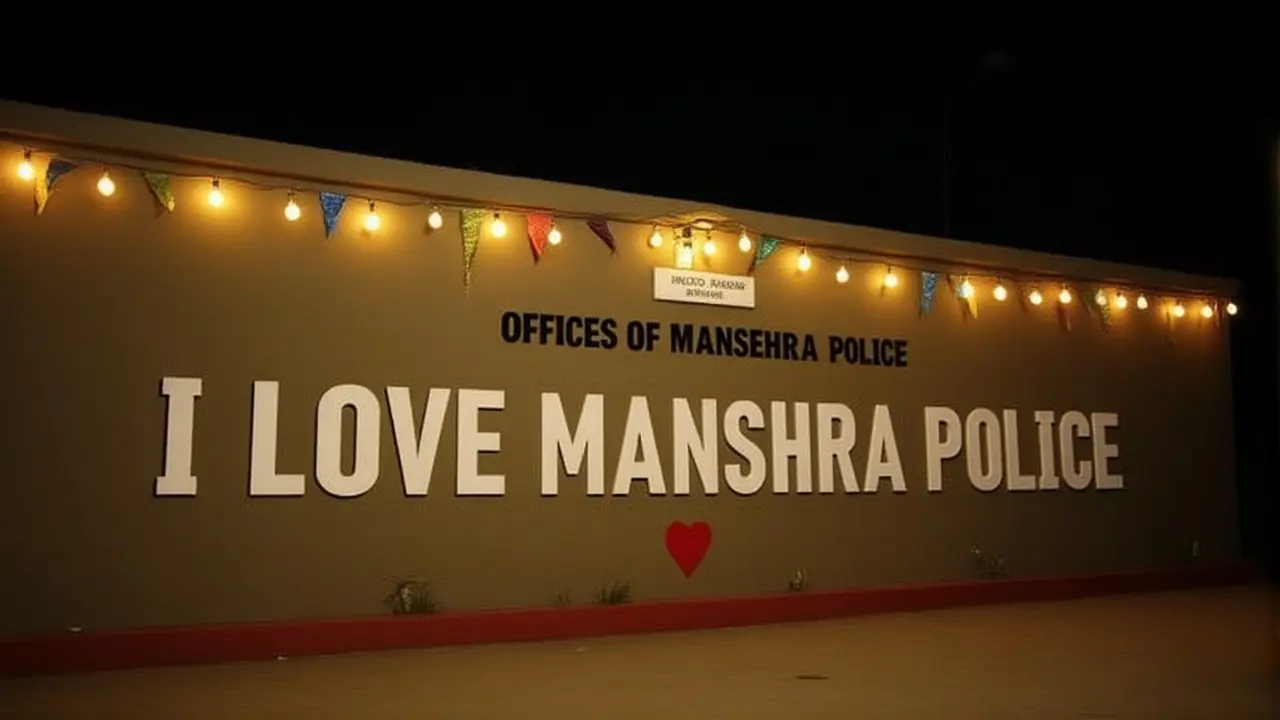
When Traffic Officer Maroof Khan, officer with the Mansehra Traffic Police and his team returned from duty on July 3, 2026, they didn’t expect to find a tragedy waiting near the Bajna Interchange. Instead of a routine shift end, they discovered a fatal crash on the Hazara Express Way that would test their professionalism in the most human way possible.
The driver was dead. But inside the wrecked vehicle sat Rs 210,000 in cash, a wallet, a mobile phone, and other personal documents. In a region where public trust in law enforcement can be fragile, the decision to return every single item to the bereaved family—after rigorous legal verification—stands out as a rare moment of integrity.
Here’s the thing: accidents happen daily on Pakistan’s highways. What doesn’t happen often is the seamless, transparent recovery and return of significant assets to victims’ families without bureaucratic delay or suspicion of theft. This incident in Mansehra highlights not just police procedure, but the human element behind it.
A Routine Patrol Turns Tragic
The timeline began simply enough. Officer Maroof Khan and his unit were heading back from traffic control duties at Chattar Battal. It was an ordinary day until they spotted an accident-damaged vehicle near the Bajna Interchange. Upon arrival, the reality hit hard: the driver had already succumbed to injuries sustained in the crash.
"On reaching the scene, they found that the driver had died in the accident," reports confirmed. The immediate priority shifted from traffic management to emergency response. The team quickly arranged for the body to be transported to a nearby hospital for official procedures. No other vehicles were involved, and no other casualties were reported, making this a solitary, tragic event on a busy stretch of highway.
But as the emotional weight of the death settled, the logistical challenge began. The deceased’s belongings were still inside the car. Among them was a substantial sum of money—Rs 210,000 in cash. In many contexts, such a discovery could lead to complications, disputes, or even allegations of mishandling. The Mansehra Traffic Police chose a different path.
Strict Adherence to Legal Formalities
Instead of handing over the items immediately, the officers followed protocol to the letter. They placed all recovered property—including the cash, wallet, mobile phone, and important documents—into official custody. This step is crucial. It creates a paper trail, ensuring accountability from the moment the items are secured.
The team then notified two other agencies: the local police station and the Motorway Police. This multi-agency coordination ensured that all jurisdictional bases were covered. Legal formalities weren't just a box to check; they were the foundation for the next critical step: verifying the heirs.
Why does this matter? Because returning property to the wrong person can cause further trauma and legal nightmares for the actual family. By insisting on verification before release, the police protected the rights of the deceased’s legitimate heirs. It’s a process that takes time, yes, but it prevents future conflicts.
Integrity Over Convenience
After the legal dust settled and the heirs were verified, the handover took place. The Mansehra Traffic Police returned the entire Rs 210,000 in cash along with all personal valuables. Not a penny was withheld. Not a document was lost.
This action has been described by reports as demonstrating "honesty and professionalism." While those words can sometimes feel like empty PR speak, in this context, they carry weight. Imagine being a grieving family, losing a loved one, and worrying about whether their life savings or essential documents will disappear into a bureaucratic black hole. For this family, that fear was alleviated by a system that worked exactly as it should.
The police also offered heartfelt condolences to the bereaved family. It’s a small gesture, perhaps, but in moments of profound loss, acknowledgment from authorities helps bridge the gap between institution and individual. It signals that the victim was more than just a statistic on a traffic report.
Broader Implications for Public Trust
In Pakistan, interactions between citizens and police can often be tense. Incidents of corruption or negligence, though not representative of all officers, erode public confidence. Stories like this one serve as counter-narratives. They show that when protocols are followed with care, the system can deliver justice and compassion simultaneously.
Experts in criminal justice administration often note that transparency in evidence handling is key to maintaining legitimacy. By involving multiple agencies (local police and Motorway Police) and documenting every step, the Mansehra Traffic Police created a model of accountability. If this level of diligence becomes standard practice across similar jurisdictions, it could significantly improve public perception of law enforcement.
Furthermore, the location—the Hazara Express Way—is a major artery connecting Islamabad to northern regions. Accidents here are frequent due to high speeds and varying weather conditions. Efficient, honest handling of post-accident affairs encourages drivers to cooperate with police, knowing their property will be treated with respect.
What Happens Next?
For the family, the focus now shifts to mourning and closure. The return of the cash and documents likely aids in settling any immediate financial obligations or administrative tasks left unfinished by the deceased. There are no ongoing investigations mentioned regarding the cause of the accident itself, suggesting it may have been a single-vehicle incident with no external culpability.
For the Mansehra Traffic Police, this case serves as a benchmark. Will it be cited in training modules? Will other stations adopt similar verification processes? Only time will tell. But for now, it stands as a testament to what happens when duty is performed with both precision and empathy.
Frequently Asked Questions
How much money was returned to the family?
The Mansehra Traffic Police returned exactly Rs 210,000 in cash to the deceased victim’s family. This amount was recovered from the accident scene and held in official custody until legal formalities were completed.
Who led the police team that responded to the accident?
Traffic Officer Maroof Khan led the team from the Mansehra Traffic Police. He was returning from traffic control duty at Chattar Battal when he spotted the damaged vehicle near the Bajna Interchange on the Hazara Express Way.
Why did it take time to return the belongings?
The delay was necessary to complete legal formalities. The police had to coordinate with the local police station and Motorway Police, and critically, they needed to verify the identity of the deceased’s legal heirs to ensure the property was handed over to the correct recipients.
Were any other items besides cash recovered?
Yes, in addition to the Rs 210,000 in cash, the police recovered a wallet, a mobile phone, important documents, and other valuable personal items. All these items were returned to the family after verification.
Where did the accident occur?
The accident occurred near the Bajna Interchange on the Hazara Express Way in Mansehra. This is a major highway route in Khyber Pakhtunkhwa province, known for heavy traffic flow between the capital and northern areas.




Roop Kaur
July 6, 2026 AT 17:08 PMThe ontological paradox of finding physical currency in a digital epoch is fascinating, yet I suspect the real narrative is obscured by bureaucratic obfuscation. Why was there such a large sum in cash? It reeks of unreported income or perhaps a darker transaction entirely.
Ankita Bajaj
July 6, 2026 AT 18:12 PMWow, this is actually really heartwarming! It’s so rare to see news that isn’t about corruption or violence. These officers are heroes for following protocol and returning everything. We need more stories like this to remind us that good people still exist in uniform!
Manish gupta
July 7, 2026 AT 01:59 AMPlease. Don't be naive. They probably took a cut before 'losing' some bills or claiming they were damaged. In this country, integrity is just a word used in press releases. The fact that they returned it at all is suspicious because it generates free PR for the police department. Typical performative honesty.
Jay Patel
July 7, 2026 AT 02:43 AM🧘♂️ The duality of man is on full display here. On one hand, we have the chaos of death; on the other, the order of bureaucracy. 📜 It is a testament to the human spirit when duty overrides greed. However, one must ask: does the system reward this, or merely tolerate it? 🤔
Pranav Gopal
July 8, 2026 AT 16:33 PMIt is important to recognize that procedure exists for a reason. Without the verification steps mentioned, the family could have been exploited by fraudsters claiming to be heirs. The delay was not inefficiency but protection. This sets a necessary precedent for how evidence and personal effects should be handled in fatal accidents.
कमल कमल
July 10, 2026 AT 11:50 AMWhile I appreciate the sentiment, let us not forget that our own nation has far superior systems for handling such matters with efficiency and transparency, often without the need for such extensive media fanfare to prove a point. The reliance on manual verification processes indicates a lack of digital infrastructure that we have long since mastered in our judicial and law enforcement frameworks. It is a small victory, yes, but it highlights the systemic gaps that remain in their administrative capabilities compared to the streamlined approaches seen elsewhere.
harsh gupta
July 11, 2026 AT 18:40 PMI doubt any of you actually read the fine print regarding jurisdictional overlap. Local police, Motorway Police, and Traffic Police all having a say usually means three different sets of paperwork and three different opportunities for something to go missing. The fact that it went smoothly is statistically improbable and suggests either extreme luck or a pre-arranged narrative.
Mukesh Katira
July 13, 2026 AT 15:11 PMMorality is not determined by the absence of theft, but by the presence of active virtue. These officers did not just refrain from stealing; they actively protected the dignity of the deceased. In an era where moral relativism erodes our foundational values, this act serves as a stark reminder that honor is still alive within institutional structures, provided individuals choose to uphold it.
Sanjay Kumar
July 14, 2026 AT 21:28 PMLook, accidents happen, and losing someone is terrible enough without worrying about your stuff disappearing. It’s good to see them doing the right thing. Imagine if they had kept the phone or the wallet-that would have been a nightmare for the family trying to sort out accounts and contacts. Simple decency goes a long way.
Gaurav Jangid
July 15, 2026 AT 04:04 AMThis is absolutely splendid!!! 😭💖 The humanity shines through!! To think that amidst the tragedy, these men chose kindness and honesty!! It restores my faith in mankind!! Let us celebrate Officer Maroof Khan!! He is a true gem in a rough world!! ✨👏
Ghanshyam Gohel
July 16, 2026 AT 08:04 AMIt is imperative to note that the Hazara Express Way is a high-risk zone due to speed and weather. The fact that no secondary looting occurred is significant. Often, bystanders or opportunists strip vehicles before police arrive. The swift arrival of Officer Khan's team likely prevented further victimization of the family. This underscores the importance of rapid response times in remote highway sections.
Nathan Lemon
July 16, 2026 AT 23:38 PMFrom a cross-cultural perspective, this incident reflects universal values of respect for the deceased and their property. In many South Asian cultures, the return of personal effects is not merely a legal obligation but a spiritual duty to ensure the peace of the departed soul. The adherence to protocol honors both the rule of law and cultural sensitivities.
Abhijit Pawar
July 18, 2026 AT 12:42 PMGood job. Protocol followed. Money returned. End of story. No need for excessive praise or conspiracy theories. Just standard professional conduct.
lavanya tolati
July 19, 2026 AT 05:05 AMit makes me sad that we have to make a big deal out of basic honesty. but i suppose its better than the alternative. the family must be relieved to get the documents back at least. hope they find some peace soon
srinivasan sridharan
July 20, 2026 AT 06:59 AMOne might argue that this is simply the bare minimum expected of public servants. Yet, given the prevailing cynicism, it is treated as a miracle. Perhaps we should stop celebrating mediocrity disguised as excellence and start demanding this level of integrity as the absolute baseline for all law enforcement interactions.
Manish gupta
July 20, 2026 AT 09:59 AMOh look, another person preaching about 'baseline integrity.' Spare me the lecture. You're sitting behind a screen typing this while probably ignoring your own civic duties. If everyone was so perfect, we wouldn't need police at all. Get off your high horse.