
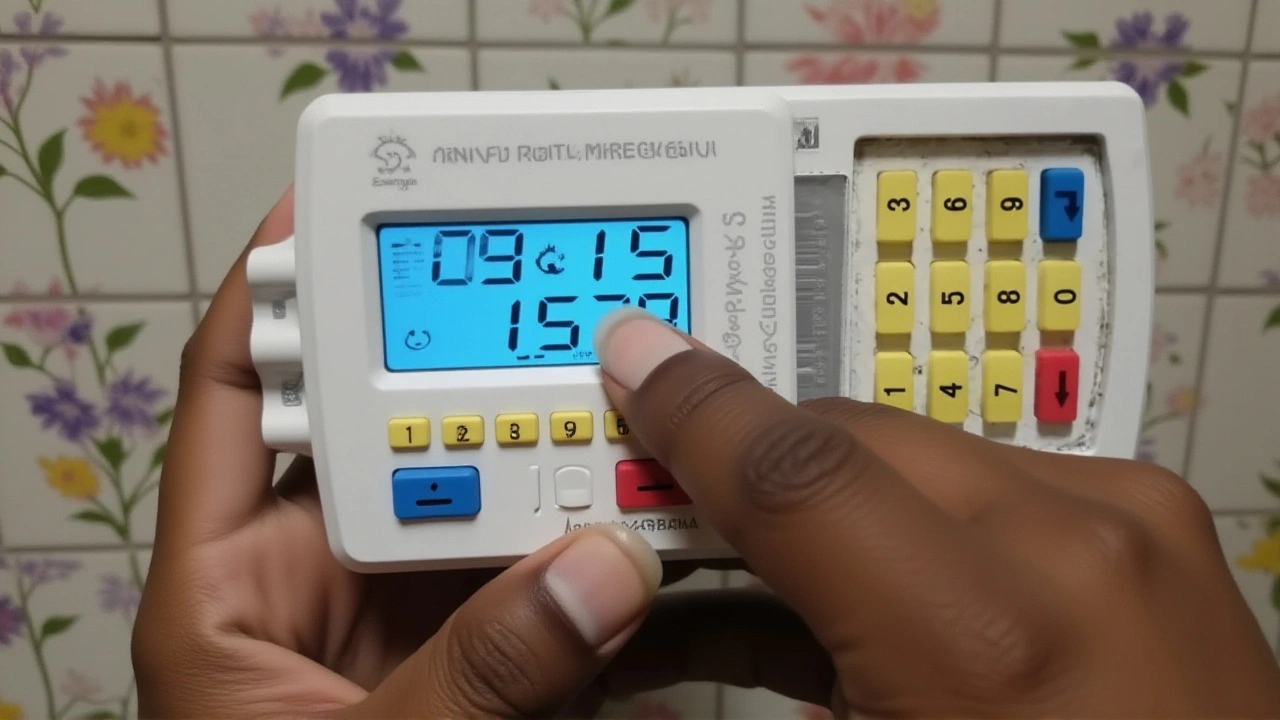
Two neighbors pay the same Ksh 500 for electricity tokens — but one gets 20 units, the other only 15. It’s not a glitch. It’s the system. On July 15, 2025, Kenya Power and Lighting Company (KPLC) finally broke its silence after months of public outcry over wildly inconsistent token amounts. The next day, Rosemary Oduor, General Manager of Commercial Services and Sales at Kenya Power and Lighting Company, laid it all out: the variation isn’t random. It’s math — and it’s tied directly to how much electricity you’ve used over the past three months.
How the Three-Tier Tariff System Works
Kenya Power doesn’t charge everyone the same rate per unit. Instead, it divides customers into three bands based on their three-month average consumption. If you used 25 units per month on average? You’re in the Lifeline Band, paying just Ksh 12.23 per unit. That’s the subsidized tier, designed for low-income households. But cross into the Economy Band — 31 to 100 units per month — and your rate jumps to Ksh 16.45. Go above 100 units? Welcome to the Standard Band, where each unit costs Ksh 19.08. Oduor confirmed this during a Citizen TV panel, adding that some customers in the highest tier face rates as high as Ksh 20.58 depending on additional adjustments.
Here’s the catch: your band isn’t determined by what you pay today. It’s determined by what you used last March, April, and May. So if you slashed your usage in June to save money, you might still be stuck in the higher tier until August. And if you used 105 units in May, 115 in June, and 120 in July? Your average is 113.3 — that puts you squarely in the top tier for August, even if you plan to cut back.
The Hidden Costs Behind Every Token
What you see on your receipt isn’t the full story. The formula is simple — but layered:
Token Units = (Amount Paid – Service Fees & Taxes) ÷ Tariff Rate
But those ‘fees and taxes’? They’re not just VAT. Kenya Power’s total cost structure includes at least six add-ons:
- 16% VAT — fixed, but still eats into your unit count
- Fuel Cost Charge (FCC) — changes monthly based on diesel and gas prices
- Foreign Exchange Rate Fluctuation Adjustment (FERFA) — because Kenya imports most of its power equipment
- Inflation Adjustment (IA) — updated quarterly
- Water Management Authority (WARMA) Levy — variable, tied to hydroelectric output from the previous month
- ERC Levy (8 cents/kWh) and REP Levy (5% of base rate) — regulatory fees
Stimatracker.com’s July 2025 data shows even the power factor surcharge kicks in if your home’s electrical efficiency dips below 0.9 — a hidden penalty most customers never realize they’re paying. So when you buy Ksh 800 and get only 31.3 units, as one consumer reported, that’s not a scam. It’s Ksh 516.25 divided by Ksh 16.49 — after every levy is peeled off.
Who Gets Hit Hardest — And Why
It’s not just about usage. It’s about timing and circumstance. A family that uses more electricity during the dry season — because they’re running water pumps or heaters — can suddenly jump from Economy to Standard Band. And once they do, they’re locked in for three months. No amount of frugality in August will help if May-July was high.
And then there’s the last-mile group — nearly 1.2 million households that got new connections through KPLC’s government-backed programs. For them, half of every token purchase goes toward repaying the upfront cost of wiring their homes. So a Ksh 100 token? Only Ksh 50 buys electricity. The rest pays for infrastructure. That’s not a secret. But it’s rarely explained at the point of sale.
As Africa Energy News reported, Ksh 500 can yield anywhere from 14 to 20 units depending on these variables. That’s a 43% swing in value for the same cash. For families living on Ksh 15,000 a month, that’s not a rounding error — it’s a budget breaker.
What This Means for Kenyan Households
Imagine planning your monthly budget around getting 20 units from Ksh 500. Then you get 15. Suddenly, you’re choosing between charging your phone, running the fridge, or keeping the lights on at night. The system isn’t designed to punish — but it doesn’t cushion the blow either. The three-month lag means consumers are always reacting to past behavior, not future needs.
What’s worse? There’s no transparency tool. No app. No simple calculator on the KPLC website that tells you, “Based on your last three months, your rate is Ksh 19.08. Here’s how many units you’ll get for Ksh 500.” Customers are left guessing — and frustrated.
What Comes Next
KPLC says it’s working on a real-time consumption dashboard — but no timeline has been given. In the meantime, experts recommend three actions:
- Track your monthly usage — write it down. Don’t rely on token receipts alone.
- Calculate your effective rate — divide the amount spent on actual electricity (after fees) by the units received. That’s your true cost.
- Plan ahead — if you’re hovering near the 100-unit threshold, try to reduce usage for two months to avoid the jump.
And for those in the Lifeline Band? Be careful. A single month of higher usage — maybe because of a new appliance or a sick relative using medical equipment — can push you into a higher tier. And once you’re there, the subsidy disappears. No warning. No grace period.
Why This Matters Beyond the Bill
This isn’t just about electricity. It’s about equity. The three-tier system was meant to be progressive — charge more to those who use more, protect the poor. But in practice, it’s punishing the vulnerable who are trying to adapt. A mother working from home during lockdown might have doubled her usage. A student studying late with a fan and laptop. A small business owner running a fridge for milk or medicine. They didn’t choose to be in the Standard Band. The system forced them there.
And when inflation hits, and fuel prices spike, and the exchange rate drops — those hidden levies get passed directly to consumers. No government subsidy. No cap. Just less power for the same money.
Kenya Power says it’s following international best practices. But in countries like South Africa and Ghana, utilities offer monthly alerts, tier thresholds, and even SMS-based usage forecasts. Kenya hasn’t. Not yet.
Frequently Asked Questions
Why do I get fewer units even when I pay the same amount every month?
Your electricity rate changes based on your three-month average consumption. If your usage rose in May, June, or July, your tariff tier may have increased — even if your payment stayed the same. Higher rates mean fewer units per shilling. Additional levies like FCC, FERFA, and WARMA also fluctuate monthly, further reducing your token units.
Can I avoid being moved to a higher tariff band by buying smaller tokens?
No. Your tariff band is determined solely by your average consumption over the past three months — not by how much you pay or how many units you buy. Buying smaller tokens won’t lower your usage average. Only reducing your actual electricity consumption over consecutive months will move you back down.
How do I calculate my true cost per unit?
Take the total amount you paid, subtract all fees and taxes (VAT, levies, etc.), then divide by the number of units you received. For example, if you paid Ksh 800 and received 31.3 units, but Ksh 283.75 went to fees, your true cost is Ksh 516.25 ÷ 31.3 = Ksh 16.49 per unit. That’s your real rate — not what’s printed on the receipt.
Why does the WARMA Levy change every month?
The WARMA Levy is tied to hydroelectric power generation. When rainfall is low and dams are running dry, KPLC relies more on expensive thermal power. To compensate, the levy increases — meaning consumers pay more per unit even if their usage hasn’t changed. It’s a cost recovery mechanism, not a fixed tax.
Are last-mile customers being unfairly charged?
Half of every token purchase by last-mile customers goes toward repaying the cost of their initial connection — a one-time infrastructure fee. That means they get 50% fewer units for the same payment. While this helps expand access, it creates a hidden subsidy that reduces immediate electricity availability, which can be especially hard for low-income households already stretched thin.
What’s being done to make this system more transparent?
Kenya Power has acknowledged public frustration and confirmed it’s developing a real-time consumption dashboard, but no launch date has been announced. Meanwhile, consumers are advised to manually track usage and use third-party calculators to estimate their effective rate. Advocacy groups are pushing for mandatory SMS alerts when a customer approaches a tariff threshold.






Uma ML
December 8, 2025 AT 08:45 AMOh wow, so Kenya Power is just running a neoliberal econ 101 experiment on poor people? Let me guess - the ‘lifeline’ band is just a propaganda tool to make the rich feel better about charging the poor more when they dare to use a fridge or a fan. And don’t even get me started on the WARMA levy - like, sure, droughts are bad, but why should my phone charging cost more because the government didn’t build enough solar? This isn’t ‘international best practice,’ it’s predatory pricing with a side of bureaucratic gaslighting. And no app? No transparency? Please. They’re not lazy, they’re lying. And I’m tired of being treated like a dumb peasant who can’t do math.
Saileswar Mahakud
December 10, 2025 AT 00:38 AMI get it, the system’s messy, but I’ve been tracking my usage for months now - writing it down like they said. Last month I dropped from 110 to 85 units, and I swear, my token units went up by 3 even though I paid the same. It’s not perfect, but it’s working. I used to panic every time I got fewer units, now I just check my average. It’s not about the system being fair - it’s about learning how to play it. Small wins, you know?
Rakesh Pandey
December 11, 2025 AT 19:13 PMso like… the fees change every month right? and your band is based on 3 months ago? so if you used more in may because your aunt was visiting and you had the AC on… you’re stuck with it till august? and then you finally cut back but it doesn’t matter because the system is always one step behind? that’s wild. like you’re being punished for being alive. also i think the last mile thing is brutal - half your money just goes to pay for wires? bro that’s like paying rent on your own house. i’m not mad, just… sad.
aneet dhoka
December 13, 2025 AT 13:27 PMLet me tell you something they don’t want you to know - this isn’t about electricity. This is about control. The same people who run Kenya Power also own the diesel importers, the foreign exchange brokers, the telecoms that charge you for SMS alerts you never asked for. The WARMA levy? A distraction. The FCC? A scam. The ‘three-month average’? A trap. They want you to think it’s math, but it’s magic. They’re feeding you numbers so you don’t notice the real theft: your autonomy. And that dashboard they’re ‘working on’? It’ll never launch. Why? Because if you knew your true rate, you’d revolt. And they can’t afford that. They need you confused, desperate, and paying.
Harsh Gujarathi
December 14, 2025 AT 18:35 PMMan, this is heavy 😔 But hey - if you’re reading this, you’re already ahead of the game. Tracking usage? Calculating real cost? That’s power right there. You’re not just paying a bill - you’re learning the system. And that’s how you win. Keep going. You got this 💪 And if you’re stuck in the Standard Band? Just breathe. One month at a time. You’re not alone.
Senthil Kumar
December 16, 2025 AT 17:19 PMsame amount paid but diff units? yeah i noticed this too. i thought it was my meter but nope. its the band. i used to be lifeline, then got a fan and boom - economy. then got a fridge and now standard. no warning. no email. no nothing. just less power. i just started saving 50 shillings extra every time i buy a token - for the fees. its dumb but it works. also pls use the calculator on stimatracker. it saved me.
Rahul Sharma
December 18, 2025 AT 02:07 AMAs someone who has lived in both Kenya and India, I must say - this system is not unique, but the lack of communication is. In Delhi, we get monthly SMS updates on tariff changes, consumption alerts, and even warnings before crossing thresholds. Here? Silence. The intent behind the three-tier model is noble - protect the poor. But execution without empathy turns policy into punishment. I urge KPLC: please, just send a simple text. ‘Your average usage has increased. Your rate is now Ksh 19.08.’ That’s all. No app needed. Just dignity.
Ayushi Kaushik
December 19, 2025 AT 11:54 AMImagine if your rent went up because you hosted a birthday party three months ago. That’s this system. And the worst part? It’s not just about money - it’s about shame. You start feeling guilty for turning on the fan. You feel like a villain for using the kettle. I used to brag about how little I used - now I just keep quiet. The system doesn’t reward conservation. It punishes it, retroactively. And the last-mile thing? That’s not infrastructure. That’s debt slavery disguised as progress. We need a reckoning, not a calculator.
Basabendu Barman
December 21, 2025 AT 03:56 AMWait wait wait - you think this is just about electricity? Nah. This is Phase 1 of the Great Energy Culling. They’re slowly starving the poor into compliance. The WARMA levy? That’s not about rain. That’s about controlling hydro dams so they can sell the water to Chinese agribusinesses. The FERFA? Fake. The real exchange rate is rigged. And the ‘three-month average’? That’s how they tag you for future surveillance. You think your phone’s being watched? Your electricity meter’s got a backdoor. They know when you’re home. When you sleep. When you cry. This isn’t a utility. It’s a social credit system with wires.
Krishnendu Nath
December 21, 2025 AT 17:11 PMokay so here’s the thing - i was in the standard band for 6 months straight because i was working from home during lockdown. i thought i was doomed. then i started unplugging everything after 8pm. no charger, no tv, no router. just me and my candle. i dropped my average by 30 units in two months. now i’m back in economy. it’s not easy but it’s possible. you can do it. just start small. one appliance at a time. you got this. 💥
dinesh baswe
December 22, 2025 AT 19:36 PMThe math is correct, but the moral framework is broken. The three-tier system assumes that consumption is a choice - but for many, it’s survival. A mother using a medical nebulizer, a student with a laptop, a vendor running a fridge for dairy - these aren’t luxuries. They’re necessities. The system doesn’t distinguish between want and need. It only sees numbers. Until KPLC builds in hardship exemptions or real-time adjustments, this isn’t progressive pricing - it’s structural violence dressed in spreadsheets. Transparency isn’t a feature. It’s a human right.
Boobalan Govindaraj
December 24, 2025 AT 08:12 AMjust started tracking my usage on a sticky note next to my fridge. last month i saved 15 units by turning off the kettle after 3 uses instead of 5. small change. big difference. i’m not rich but i’m learning. the system ain’t fair but i ain’t giving up. one unit at a time. you too can do this. stay strong. we got this 🙌