
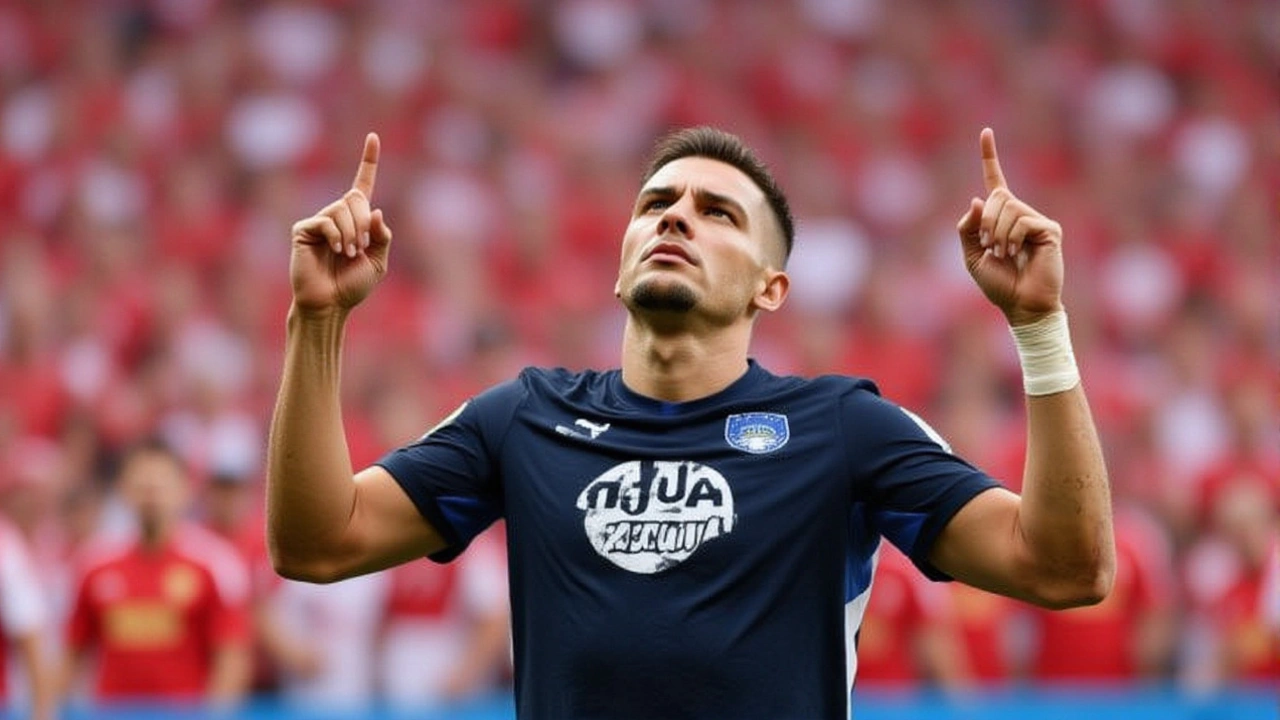
When Tim Lemperle stepped onto the pitch at PreZero Arena on Friday, October 4, 2025, he wasn’t just playing for TSG Hoffenheim — he was confronting his past. The 23-year-old forward, who scored two goals and added one assist in his first four Bundesliga appearances for Hoffenheim after leaving 1. FC Köln, faced his former club for the first time in front of a tense, expectant crowd in Sinsheim. This wasn’t just another Matchday 6 fixture. It was a reckoning — for Lemperle, for both teams, and for a Bundesliga season teetering on the edge of chaos.
Lineups Reveal Tactical Shifts Amid Injury Woes
TSG Hoffenheim manager Christian Ilzer went with a 4-2-3-1, anchoring the backline with veteran captain Oliver Baumann in goal and Robin Hranáč and Albian Hajdari at center-back. But Hajdari’s illness cast a shadow — reports suggested Arthur Chaves was warming up as a potential replacement. The midfield trio of Leon Avdullahu, Muhammed Damar, and Fisnik Asllani were all set to be subbed off between the 64th and 72nd minutes, signaling a high-tempo, early push for goals. Meanwhile, 1. FC Köln boss Lukas Kwasniok deployed a 3-4-2-1, a shape that’s become his signature since taking over. Marvin Schwäbe, the team’s captain and last line of defense, kept his spot despite only one clean sheet in his last ten games. The real story? Jakub Kamiński — the Polish midfielder who’s been on fire, scoring in three of his last four appearances — started in the attacking midfield slot alongside Said El Mala, who was handed his first league start after months on the bench.Who’s Injured? Who’s Out? The Hidden Story
Behind the starting XI lies a tale of attrition. For Hoffenheim, Adam Hložek — a dynamic forward — remains sidelined with a broken ankle, expected out until December 2025. Wouter Burger, a key ball-winner, was a doubt — and if he’d been unfit, Umut Tohumcu was ready to step in. The team’s attack, reliant on Touré, Asllani, and Avdullahu for assists, looked thin without Hložek’s pace. Köln’s injuries were even more brutal. Luca Kilian, their starting center-back, is out for the entire season after a torn ACL. Marius Bulter, their left-back, is still recovering from a hamstring tear suffered against RB Leipzig. That forced Linton Maina into a role he wasn’t fully suited for. And while Rav van den Berg was expected back in October, he wasn’t ready yet — leaving Joël Schmied, Eric Martel, and Timo Hübers as the makeshift back three.Form, Fear, and the Pressure of the International Break
Hoffenheim came into this game on the back of a 1-1 draw with SC Freiburg — a result that felt like a step backward after a 3-1 thrashing by Bayern Munich. They needed a win. Not just for points, but for morale. Their last three matches? One win, one draw, one loss. The pressure was mounting. Köln? They were worse. After winning three of their first four games, they’d managed just one point from their last three — a 0-0 draw against Mainz and back-to-back 2-1 losses to Stuttgart and Borussia Dortmund. Their attack, once lethal, had gone cold. Jakub Kamiński was their only consistent threat, scoring three goals in four games. But without Gian-Luca Waldschmidt and Florian Kainz — both also on three goals — the scoring burden was on him.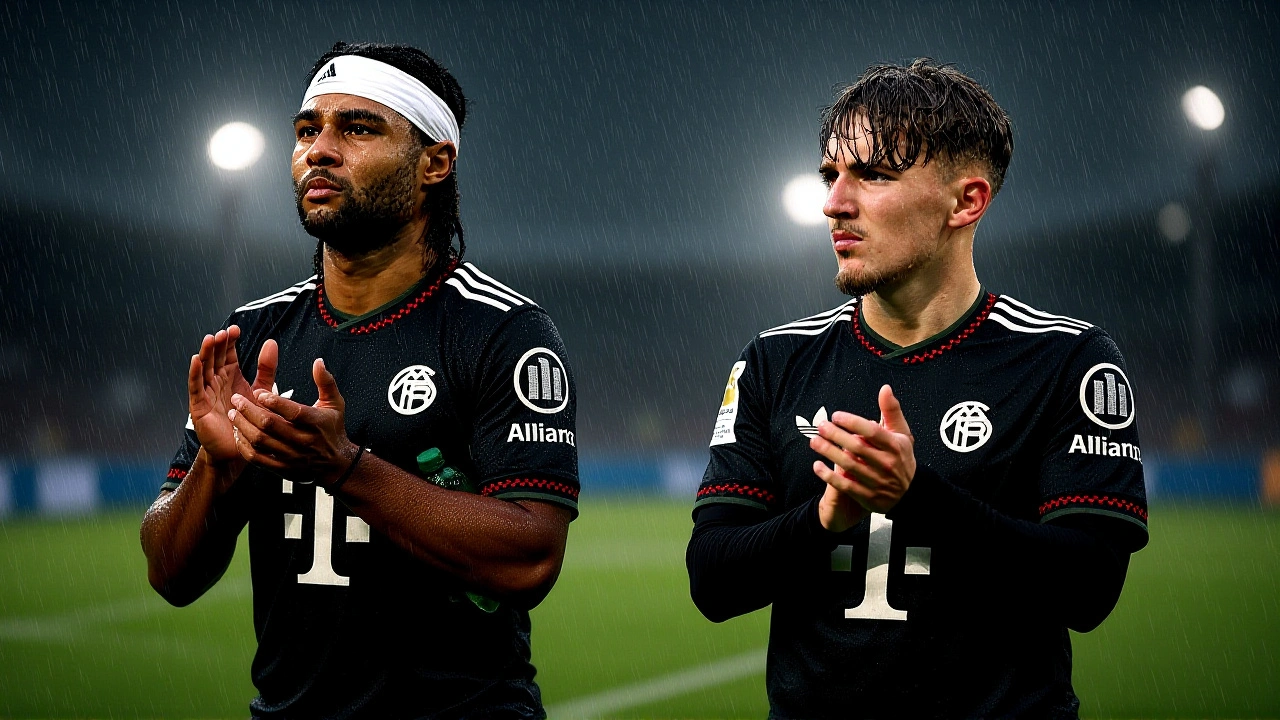
The Substitution Playbook: A Game of Chess
The substitutions told their own story. Hoffenheim’s plan was clear: burn out Köln’s defense early. Avdullahu, Damar, and Asllani all came off before the 70th minute — replaced by Ihlas Bebou, Andrej Kramarić, and Max Moerstedt. Kramarić, a former Bundesliga top scorer, was the wildcard — a veteran’s touch to break open a tight game. Köln’s changes were reactive. Jan Thielmann, who’d scored twice this season, was pulled at halftime — replaced by Ragnar Ache. That signaled Kwasniok’s frustration. Then, at 72’, both El Mala and Heintz were replaced — a clear sign the defense was crumbling. Cenk Özkacar and Linton Maina were thrown in as emergency fixes. At 84’, Tom Krauß and Denis Huseinbasic entered — the final desperate attempts to hold on.What This Match Means for the Bundesliga Table
A win for Hoffenheim could lift them into the top half — a much-needed boost before the international break. A draw? It’s still a moral victory. But a loss? It could push them into the relegation zone. For Köln? A win would be their first in five games — a lifeline. A loss? It would mark their worst run since 2021. And with the league’s mid-table pack tightening, every point matters. The stats don’t lie: Hoffenheim’s attack is balanced but fragile. Köln’s defense is leaking. Lemperle’s return to his old stomping ground adds emotional weight. And with both teams battered by injuries, this wasn’t just a game of tactics — it was a test of will.Frequently Asked Questions
Why is Tim Lemperle’s return to Köln significant?
Tim Lemperle spent three seasons at 1. FC Köln, making 47 appearances and scoring 7 goals before joining Hoffenheim in summer 2025. His two goals and one assist in just four Bundesliga games for Hoffenheim — including a brace against Freiburg — made him a fan favorite. Facing his former club for the first time, he carried emotional weight — and the pressure of proving he belonged elsewhere.
How has Jakub Kamiński impacted Köln’s season?
Kamiński, signed from Brøndby in January, has been Köln’s sole offensive spark. With three goals in his last four games and six total this season, he’s the only player on the team with more than two goals. His ability to drift into space and finish from distance has kept Köln alive in the table — even as the defense collapses around him.
What’s the injury situation for both teams heading into the break?
Hoffenheim’s Adam Hložek is out until December with a broken ankle, and Albian Hajdari’s illness raised concerns about defensive depth. Köln faces a far worse scenario: Luca Kilian’s season-ending ACL tear, Marius Bulter’s hamstring injury, and Rav van den Berg’s delayed return leave them with only three fit center-backs. Both teams enter the break with depleted squads.
How do Hoffenheim’s and Köln’s formations compare tactically?
Hoffenheim’s 4-2-3-1 is more traditional, emphasizing width and midfield control through Avdullahu and Asllani. Köln’s 3-4-2-1 is riskier — it leaves fullbacks exposed but creates overloads in attack. With only three defenders, Köln relies on midfielders like Martel and Johannesson to track back — a strain that led to their recent defensive collapses.
What’s at stake for both managers before the international break?
Christian Ilzer needs a win to silence critics who say he’s too cautious. A loss could trigger fan unrest and pressure from the board. For Lukas Kwasniok, a draw might be acceptable — but another loss would raise serious questions about his ability to stabilize a team that started the season so strongly. Both are coaching for their jobs as much as for points.
What do the stats say about who’s likely to win?
Hoffenheim has better ball retention (58% average) and more shots on target per game (4.2), while Köln scores more from set pieces (40% of goals). But Köln’s defense concedes 2.1 goals per game — the worst in the top half. If Hoffenheim’s attack clicks early, they’re favored. If Köln’s midfield holds, it’s a grind.



Danny Johnson
December 15, 2025 AT 00:29 AMMan, Lemperle’s got guts showing up against his old team like that. I’ve been watching him since his Köln days - he’s always played with heart. Hoffenheim got lucky landing him, and now he’s got the chance to prove he’s more than just a flash in the pan. Hope he scores just to see the look on the Köln fans’ faces.
Christine Dick
December 15, 2025 AT 17:09 PMLet’s be clear: this is a betrayal of club loyalty. Lemperle abandoned his roots for a bigger paycheck, and now he’s parading his ‘success’ in front of the very people who gave him his first chance. This isn’t football - it’s theater for the morally bankrupt.
Jullien Marie Plantinos
December 17, 2025 AT 13:34 PMWhy are we even talking about this? Köln’s defense is held together with duct tape and hope. Hoffenheim’s attack? A bunch of guys who can’t finish unless someone holds the ball for them. This match is a glorified training drill with extra drama.
Crystal Zárifa
December 18, 2025 AT 05:54 AMI’m just here for the quiet moments - like when Lemperle looked up at the stands before kickoff. No smile. No wave. Just… stillness. You could feel the weight of every pass he didn’t take last season. Football’s not about stats. It’s about ghosts.
Serena May
December 19, 2025 AT 08:09 AMKöln’s defense is a dumpster fire. 🔥
Cheryl Jonah
December 21, 2025 AT 07:28 AMDid you know Hoffenheim’s owner secretly owns a chain of German sausages? That’s why they’re spending so much on forwards - they need to sell more bratwurst. This match is just a marketing stunt. The whole league is fake.
James Otundo
December 22, 2025 AT 19:38 PMFrankly, I’m disappointed in Ilzer’s tactical approach. The 4-2-3-1 is a relic of the 2010s - it lacks spatial intelligence and fails to exploit the half-spaces. Kwasniok’s 3-4-2-1, while risky, at least demonstrates a coherent philosophy of verticality and press resistance. This isn’t football - it’s amateur hour.
Sarah Day
December 24, 2025 AT 18:57 PMI just hope everyone stays healthy after this. The injuries are ridiculous. I mean, how many center-backs do you need to lose before you just say ‘we’re done’?
ryan pereyra
December 25, 2025 AT 05:25 AMThe asymmetry in midfield density is statistically unsustainable. Hoffenheim’s central trio lacks lateral coverage metrics, while Köln’s inverted fullback structure creates exploitable vertical corridors - this isn’t just a tactical mismatch, it’s a systemic failure of modern coaching paradigms.
Jane Roams Free
December 26, 2025 AT 17:22 PMTim Lemperle’s journey is beautiful. He didn’t just switch clubs - he carried his story with him. Sometimes, the game isn’t about winning. It’s about honoring where you came from while becoming who you’re meant to be.
Anthony Watkins
December 27, 2025 AT 06:42 AMKöln fans are crying into their beer again. They had one good season and now they’re falling apart like a cheap umbrella. America’s got better football. Period.
Bryan Kam
December 27, 2025 AT 23:29 PMThat’s not a comeback. That’s just a salary increase.
Andrea Hierman
December 28, 2025 AT 01:47 AMIt’s fascinating how we assign moral weight to player transfers. Lemperle didn’t steal from Köln - he was released, and he chose a club that gave him minutes. Should we shame players for seeking growth? Or should we celebrate the fact that football allows people to evolve? I’d rather see him thrive than watch him stagnate.
And let’s not pretend Köln’s defense is collapsing because of injuries alone - they’ve been porous since the summer. The real tragedy isn’t Lemperle’s return - it’s that nobody noticed how broken their backline was until it was too late.
Also, Kramarić coming on? That’s the kind of substitution that changes the mood of an entire stadium. Not because he’s flashy, but because he’s calm. He doesn’t need to celebrate. He just needs to finish.
And Kamiński? He’s the only reason Köln still has hope. One man carrying a team on his back - that’s the poetry of this game. No stats, no drama, just pure will.
I’ve watched this league for over a decade. This isn’t the most exciting match, but it’s one of the most human. There are no villains here. Just people trying to do their jobs under impossible pressure.
Maybe that’s why it matters. Not because of the points. Not because of the table. But because someone out there - maybe a kid in Ohio or Osaka - watched this and thought, ‘I could do that too.’
So let’s not reduce it to memes or moral outrage. Let’s just appreciate the quiet courage of a guy walking back into the place that let him go… and still giving it everything he’s got.
Jason Davis
December 28, 2025 AT 13:50 PMMan, I’ve seen Lemperle play in the 2. Bundesliga - back when he was just a scrappy kid with too much energy and not enough polish. Now he’s got that quiet confidence - the kind you don’t see in highlight reels. You see it in how he holds his body when he’s waiting for the ball. Like he already knows where it’s going.
And Köln’s backline? I mean… they’re not just missing players, they’re missing structure. It’s like trying to play chess with half the pieces and no one telling you the rules.
But hey - that’s football. You adapt. You bleed. You keep showing up. Even when the crowd’s booing. Even when your coach’s system looks like a PowerPoint slide from 2012.
And honestly? I’m rooting for Kramarić. Not because he’s a legend - but because he’s still hungry. At 34, he’s got nothing left to prove, yet he’s still warming up like he’s trying to make the team. That’s the kind of guy who makes football worth watching.
Also, someone please tell Serena May to stop spamming fire emojis. It’s getting weird.
Cheri Gray
December 28, 2025 AT 15:58 PMdid anyone else notice that jackson was wearing the wrong boots? i mean like… the ones with the red laces? that’s not even the brand they use in germany. so… is this a plot twist? or just a typo?
Yogananda C G
December 29, 2025 AT 09:01 AMLet me tell you something profound about this match - and forgive me if I sound overly philosophical, but football is the mirror of the human soul. Tim Lemperle, returning to his former club, represents the eternal struggle between belonging and becoming. He was once a son of Köln - nurtured by their youth academy, cheered by their fans, given his first taste of Bundesliga glory. Yet he left. Not out of betrayal, but out of necessity - the need to grow beyond the walls that once protected him. This is not a game of goals and formations; it is a metaphysical reckoning. The stadium, the crowd, the silence before the whistle - all of it is a sacred space where past and future collide. The injuries? They are the scars of modern sport - a system that demands more than the body can give, that consumes youth and discards it like yesterday’s ticket stub. And yet, here we are. Watching. Caring. Holding our breath. Because in this fragile, fleeting moment, we are reminded that we too are all just trying to find our way back - to ourselves, to our roots, to the people who believed in us before the world did. So let the goals come. Let the substitutions swirl. But do not forget: the true winner is the one who dares to return, even when the path is paved with silence.